More Than Art
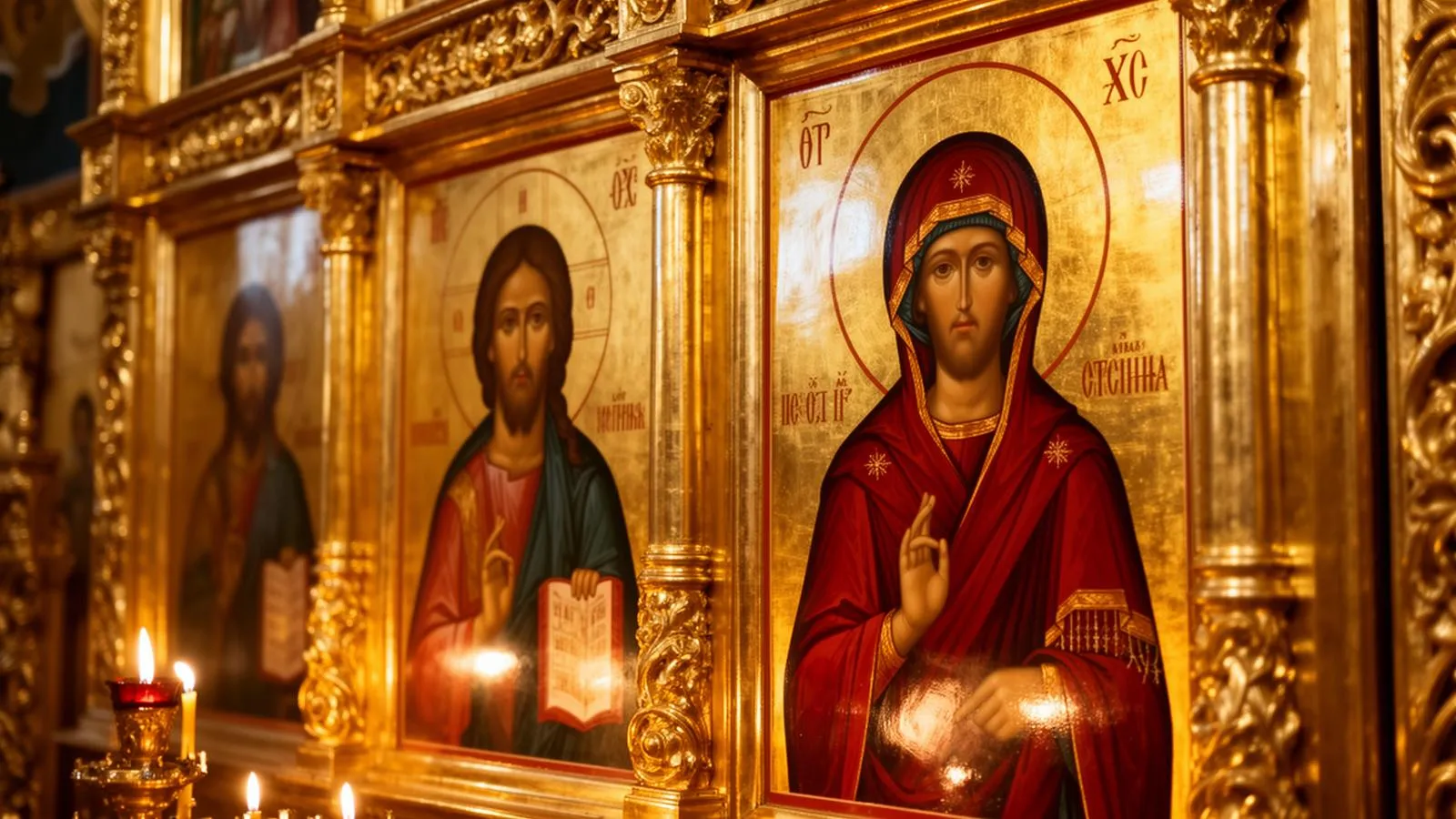
Walk into any Orthodox church and you will be surrounded by icons — painted images of Christ, the Theotokos, saints, and events from sacred history. To the uninitiated, they may look like religious art. To the Orthodox Christian, they are far more: they are windows into the heavenly reality.
The Theology of Icons
The defense of icons rests on a profound theological truth: the Incarnation. Because God became man in Jesus Christ — taking on visible, material, human form — it is not only permissible but necessary to depict Him in images. To deny the possibility of icons is, in a sense, to deny the Incarnation itself.
"Of old, God the incorporeal and formless was never depicted, but now that God has been seen in the flesh and has associated with humankind, I depict that part of God which has been seen."
How Icons Are Used
In Church
Icons fill the walls, ceiling, and iconostasis of an Orthodox church. They are not decoration — they are theology in color. The arrangement of icons in a church follows a specific program that tells the story of salvation.
At Home
Most Orthodox families maintain an icon corner — a dedicated space in the home with icons, a lamp or candle, and often a prayer book. This is the family's place of prayer.
In Personal Devotion
Orthodox Christians greet icons with veneration: they bow, make the sign of the cross, and kiss the icon. This is not worship of the image — it is honor directed through the image to the person depicted.
The Seventh Ecumenical Council (787 AD) definitively resolved the iconoclast controversy, affirming that veneration of icons is not idolatry but a natural consequence of the Incarnation. The honor paid to the icon passes to its prototype.
Senior Writer
Maria is a lifelong Orthodox Christian and writer covering faith, liturgical life, and the journey of seekers exploring the ancient Church. She holds a degree in theology from St. Vladimir's Seminary.
Continue Reading
The Seven Sacraments of the Orthodox Church
The sacraments — called Holy Mysteries — are the channels of God's grace in Orthodox life. Explore all seven and what they mean for the faithful.
What to Expect at Your First Orthodox Church Visit
Walking into an Orthodox church for the first time can be overwhelming — the icons, the incense, the chanting. Here's a friendly guide to help you feel at home.
How to Become Orthodox Christian: A Practical Guide
Becoming Orthodox is a journey, not a transaction. This guide walks you through the process — from first visit to baptism and chrismation — with honesty and practical advice.
Stay on the Path
Get weekly Orthodox insights, feast day guides, and parish spotlights delivered to your inbox.
No spam. Unsubscribe anytime.