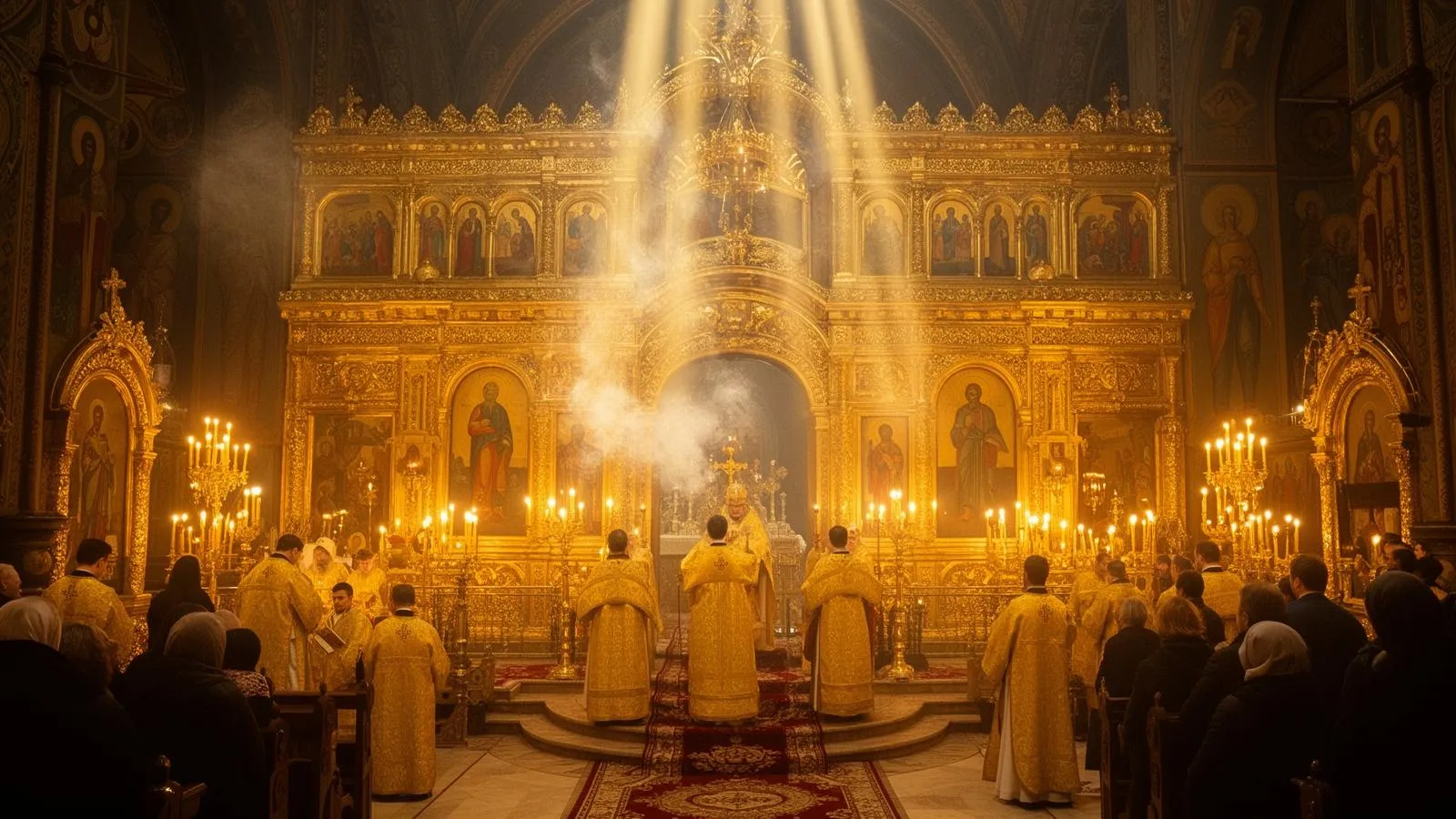
What Is the Divine Liturgy?
The Divine Liturgy is the central worship service of the Orthodox Church — the service in which the faithful receive Holy Communion. It has been celebrated in essentially the same form since the 4th century, following the liturgical text of St. John Chrysostom (used most Sundays) or St. Basil the Great (used ten times per year).
The Structure
The Liturgy has three main sections:
1. The Proskomedia (Preparation)
Before the public service begins, the priest prepares the bread and wine at the table of preparation. He cuts the Lamb (a square portion of the bread) and arranges particles on the diskos (paten) to commemorate the Theotokos, saints, the living, and the departed. This happens behind the iconostasis and is not visible to the congregation.
2. The Liturgy of the Word
This is the first public portion of the service:
- The Great Litany — a series of petitions beginning with "In peace, let us pray to the Lord"
- The Antiphons — Psalms sung by the choir, interspersed with prayers
- The Small Entrance — the clergy process with the Gospel book through the nave
- The Epistle and Gospel readings — Scripture proclaimed to the congregation
- The Homily — the priest's sermon
3. The Liturgy of the Faithful
The Eucharistic portion of the service:
- The Great Entrance — the bread and wine are carried in procession to the altar
- The Nicene Creed — the entire congregation recites the statement of faith
- The Anaphora — the great Eucharistic prayer of thanksgiving and consecration
- The Lord's Prayer — prayed by all
- Holy Communion — the faithful receive the Body and Blood of Christ
- The Dismissal — final prayers and blessing
"The church is an earthly heaven in which the super-celestial God dwells and walks about."
Participating Reverently
You do not need to understand everything to participate meaningfully. Stand when others stand. Sit when you need to rest. Listen to the chanting and let the prayers carry you.
Many parishes have printed service books or liturgy guides for visitors. Don't be afraid to ask for one. Following along with the text helps newcomers understand the flow of the service.
Contributing Writer
Fr. David is a priest in the Antiochian Archdiocese serving a parish in the Midwest. He writes about worship, parish life, and practical guidance for converts and catechumens.
Continue Reading
What to Expect at Your First Orthodox Church Visit
Walking into an Orthodox church for the first time can be overwhelming — the icons, the incense, the chanting. Here's a friendly guide to help you feel at home.
How to Become Orthodox Christian: A Practical Guide
Becoming Orthodox is a journey, not a transaction. This guide walks you through the process — from first visit to baptism and chrismation — with honesty and practical advice.
Orthodox Fasting for Beginners: Rules, Seasons, and Practical Tips
Fasting is central to Orthodox spiritual life, but the rules can seem daunting. Learn the basics and how to start with your priest's guidance.
Stay on the Path
Get weekly Orthodox insights, feast day guides, and parish spotlights delivered to your inbox.
No spam. Unsubscribe anytime.