Photo: Wikimedia Commons / Public Domain
The Resurrection (Anastasis)
Ἀνάστασις
Сошествие во ад
Celebrated: Pascha (moveable)
Chora Church (Kariye Mosque), Istanbul
About This Icon
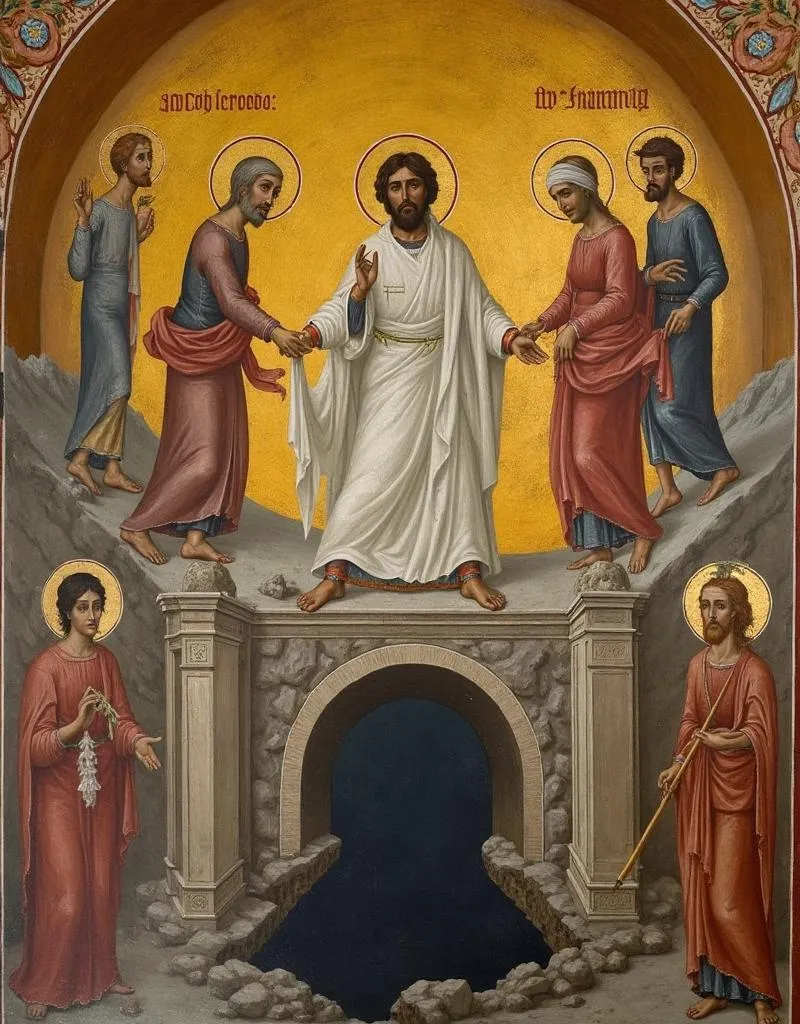
The quintessential Orthodox image of the Resurrection is not Christ emerging from a tomb but Christ descending into Hades to rescue the dead. He stands on the shattered gates of hell, grasping Adam and Eve by the wrists and pulling them from their tombs. This is the Paschal icon — the image of Easter.
Unlike the Western Resurrection images that focus on Christ's personal victory, the Anastasis shows what his Resurrection means for all of humanity: death itself has been defeated, and the prisoners of Hades are set free.
Symbolism & Iconographic Elements
Broken Gates: The gates and locks of Hades lie shattered beneath Christ's feet, depicting his conquest of death.
Adam and Eve: Christ pulls the first humans from their tombs, symbolizing the salvation of all humanity from the beginning of time.
The Dark Abyss: The black void below represents Hades — not a place of punishment but the realm of death from which Christ frees the righteous.
Prayer
Christ is risen from the dead, trampling down death by death, and upon those in the tombs bestowing life!