Photo: Wikimedia Commons / Public Domain
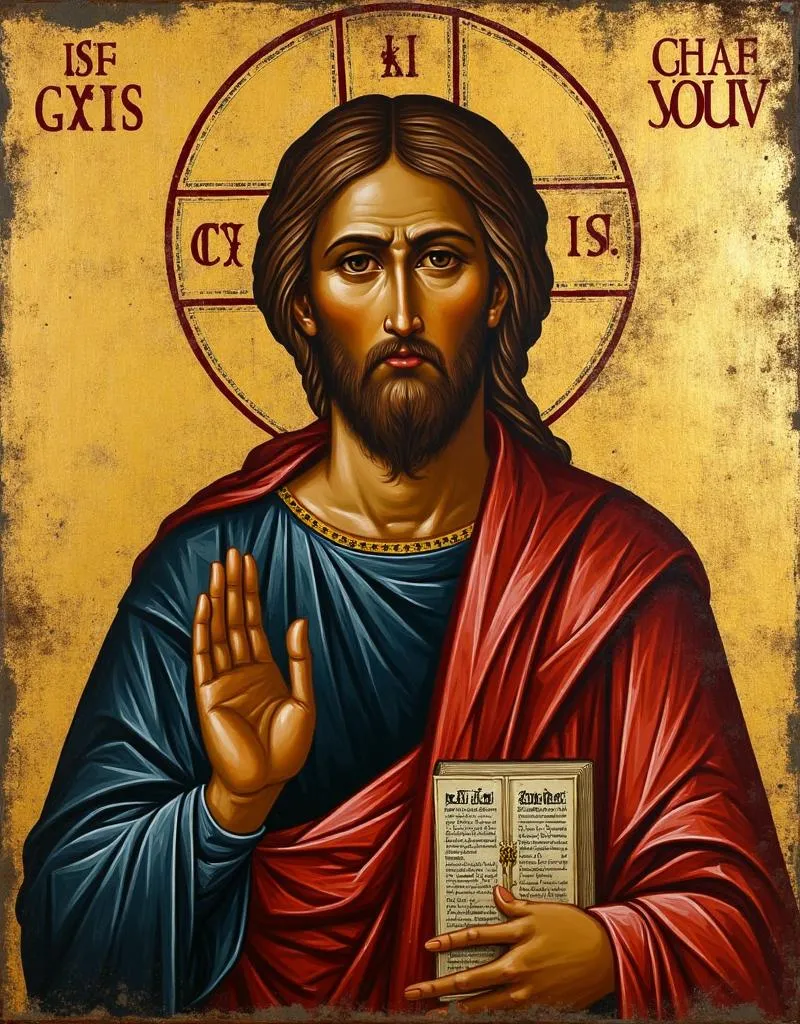
Christ Pantocrator
Χριστός Παντοκράτωρ
Saint Catherine's Monastery, Sinai
About This Icon
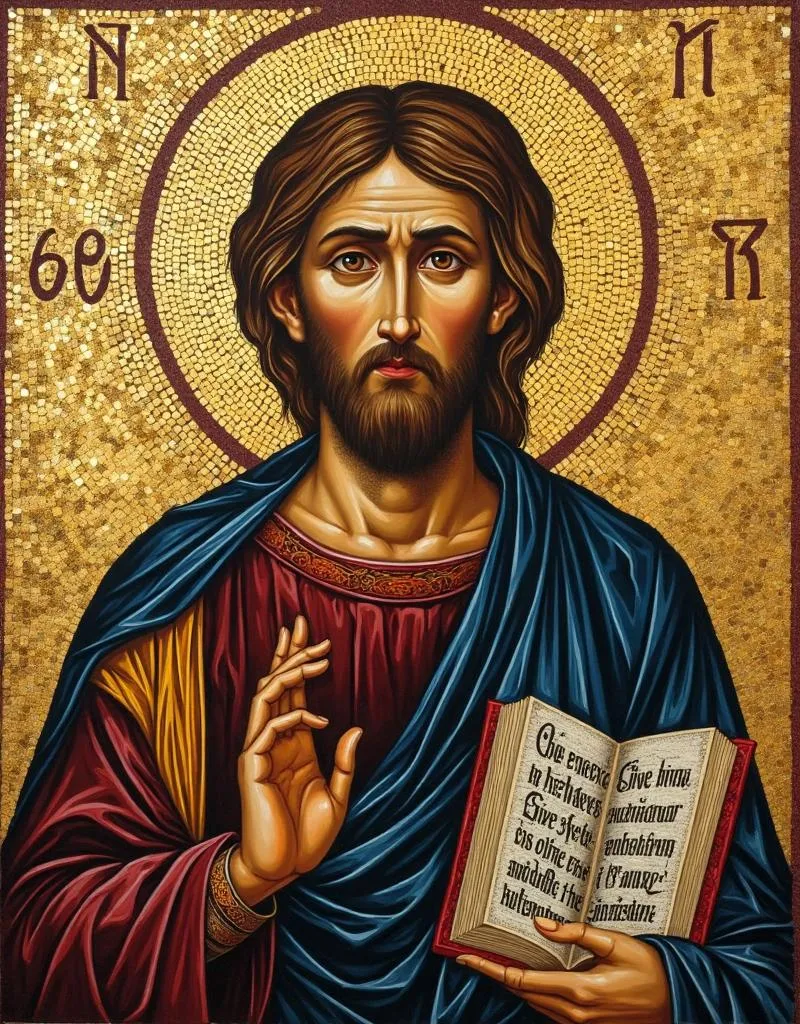
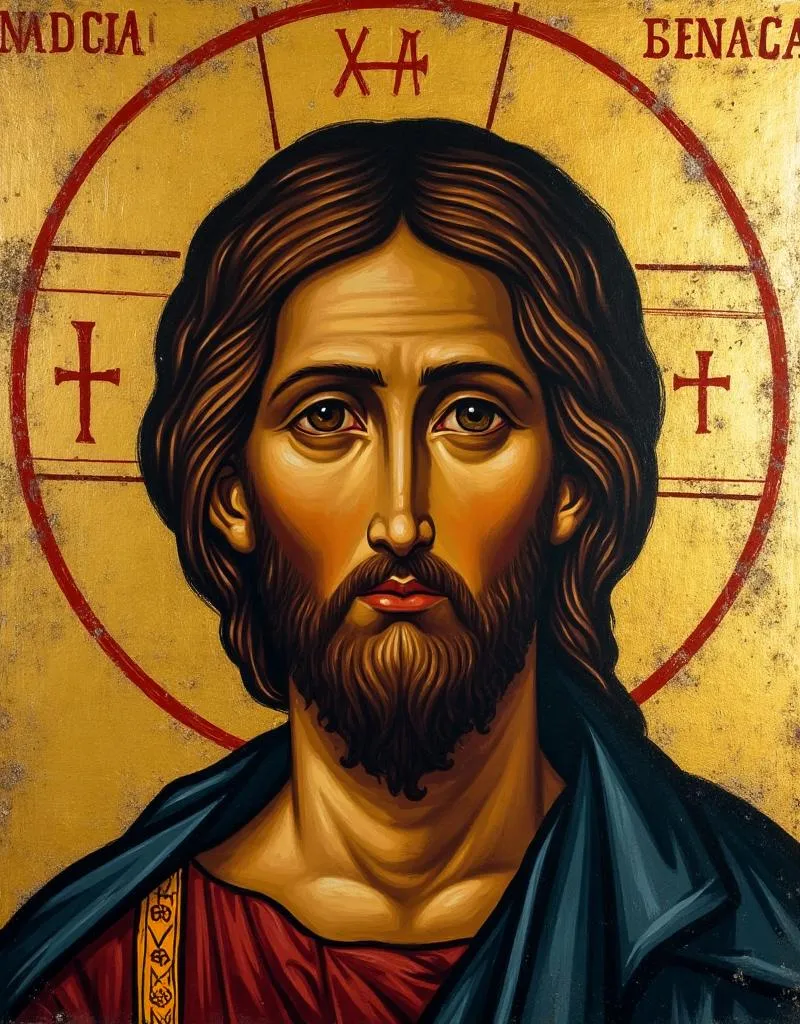
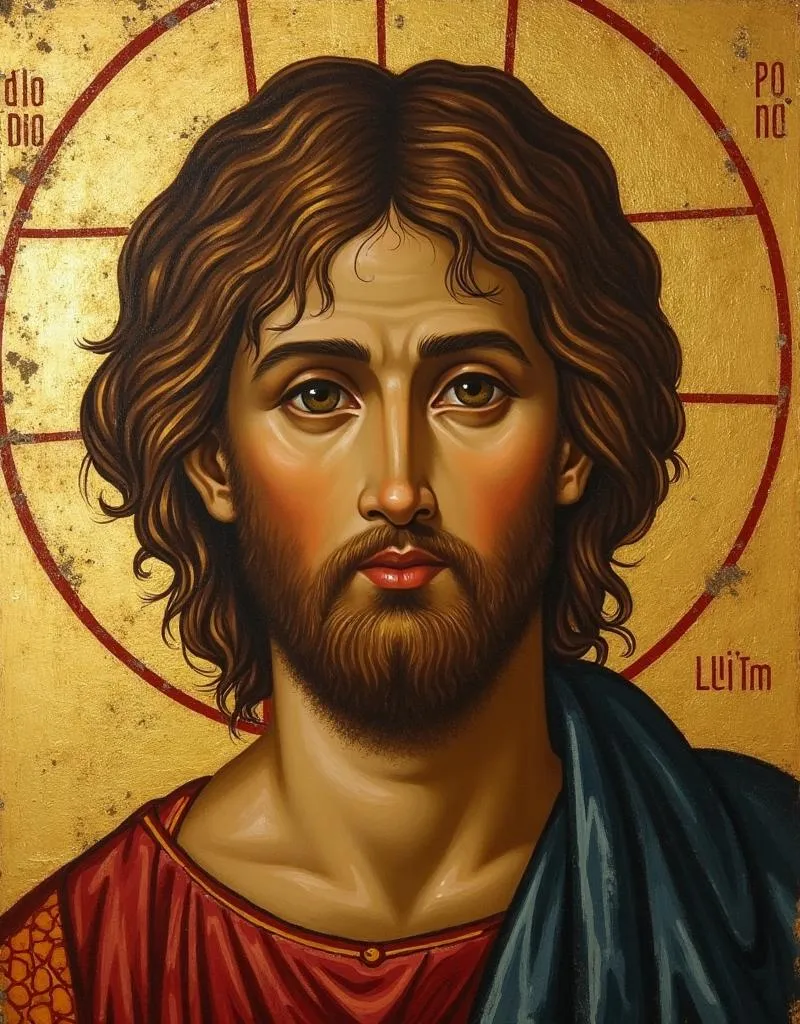
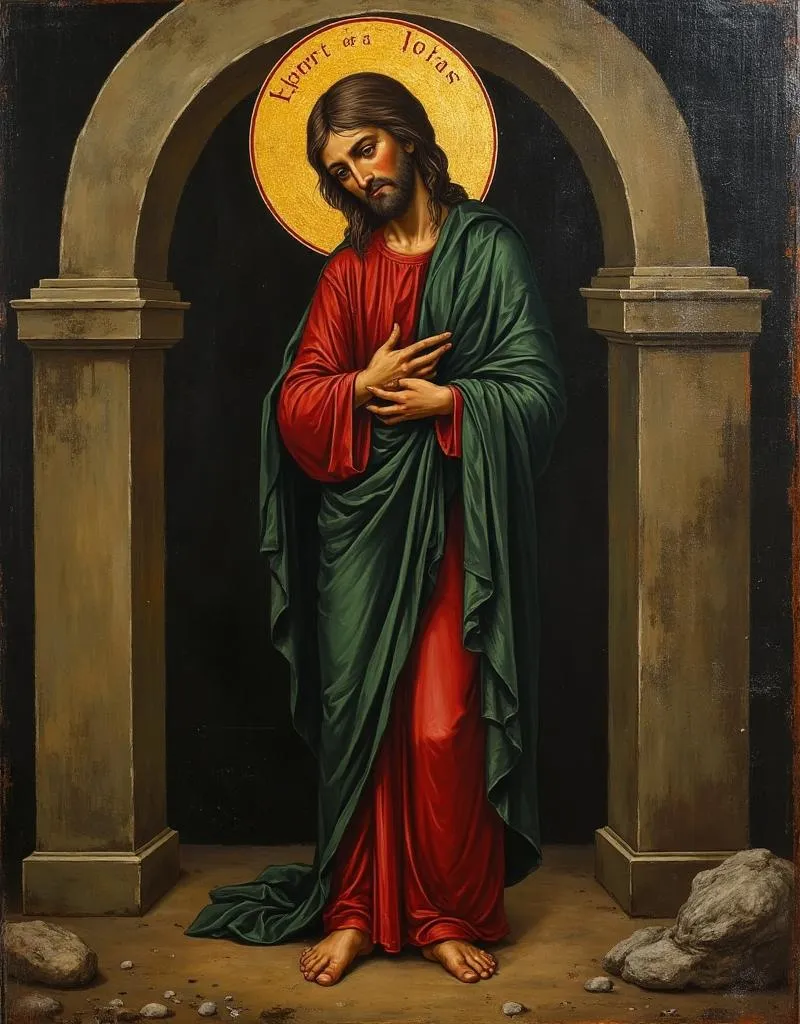
The oldest known icon of Christ Pantocrator, dating to the 6th century and preserved at Saint Catherine's Monastery on Mount Sinai. This encaustic painting on wood is remarkable for its asymmetric face — scholars note that the left side appears gentle and merciful while the right side appears stern and judging, embodying the dual nature of Christ as both God and man.
The icon survived the iconoclastic period (726–843 AD) because of Sinai's remote location outside the Byzantine Empire's direct control. It remains one of the most studied and reproduced icons in history.
Symbolism & Iconographic Elements
The Blessing Hand: Christ's right hand is raised in blessing, with fingers forming the letters IC XC (the Greek abbreviation of Jesus Christ). This gesture simultaneously blesses the viewer and proclaims Christ's identity.
The Gospel Book: Held in his left hand, the closed Gospel book represents Christ as the Word of God — the Logos who was with God from the beginning.
The Halo: The cruciform halo (containing a cross) is unique to Christ in iconography. Within it are the Greek letters Ο ΩΝ, meaning 'The Existing One' or 'I AM' — God's name revealed to Moses.
The Asymmetric Face: The deliberate asymmetry conveys Christ's two natures: divine and human, judge and savior, transcendent and intimate.
History
This icon was likely created in Constantinople and sent to the Sinai monastery, which was established by Emperor Justinian I around 548 AD. The encaustic technique (using heated beeswax as a binding medium) connects it to the Fayum portrait tradition of Roman Egypt.
The icon was 'rediscovered' by scholars in the 19th century and has been extensively restored and studied. It is considered the prototype for all subsequent Christ Pantocrator icons.