Photo: Wikimedia Commons / Public Domain
Our Lady of Vladimir
Παναγία ἡ Ἐλεοῦσα
Владимирская икона Божией Матери
Celebrated: June 3 / May 21 (Old Calendar)
Tretyakov Gallery, Moscow
About This Icon
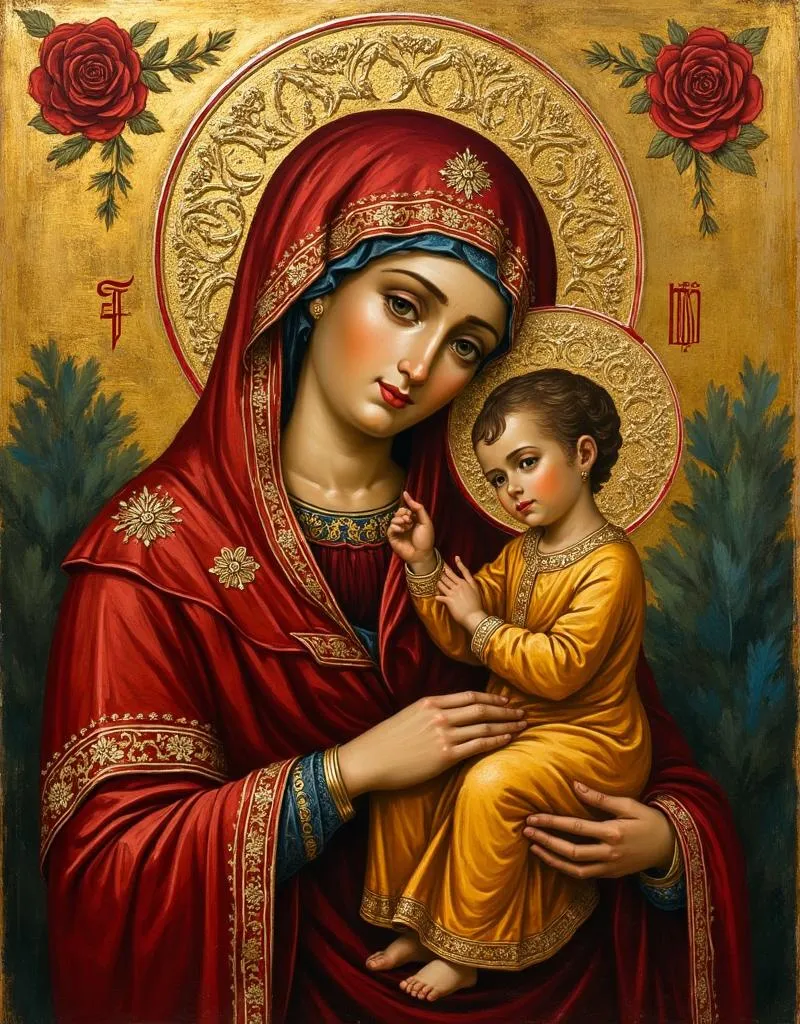
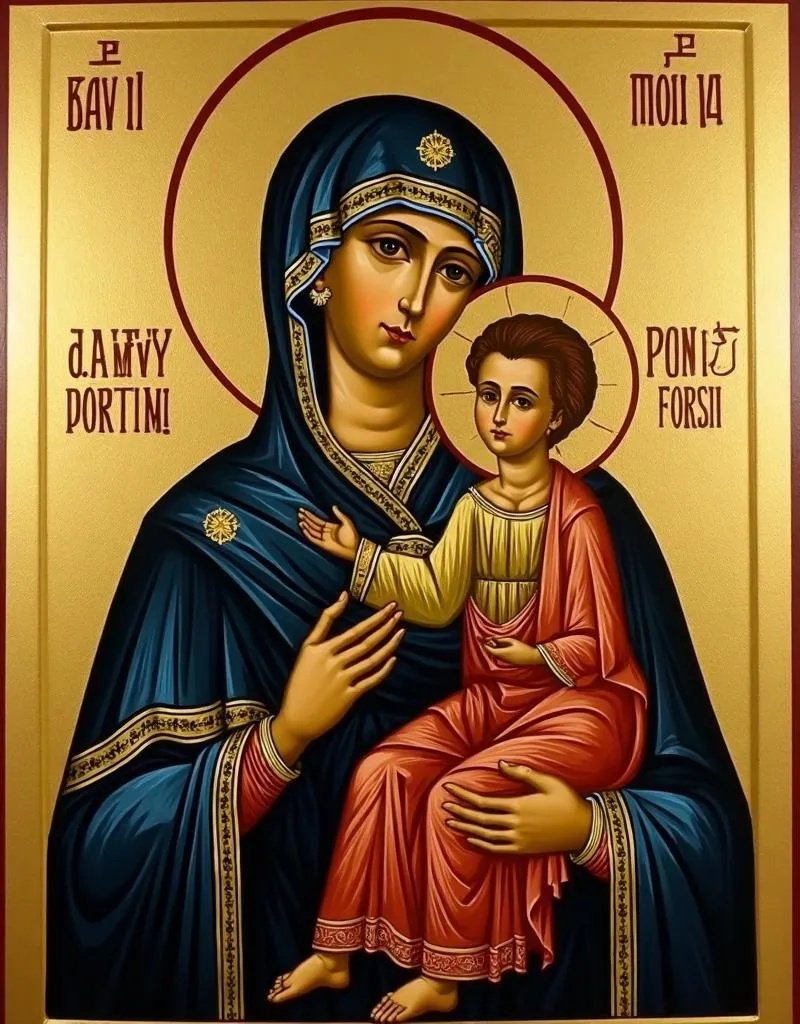
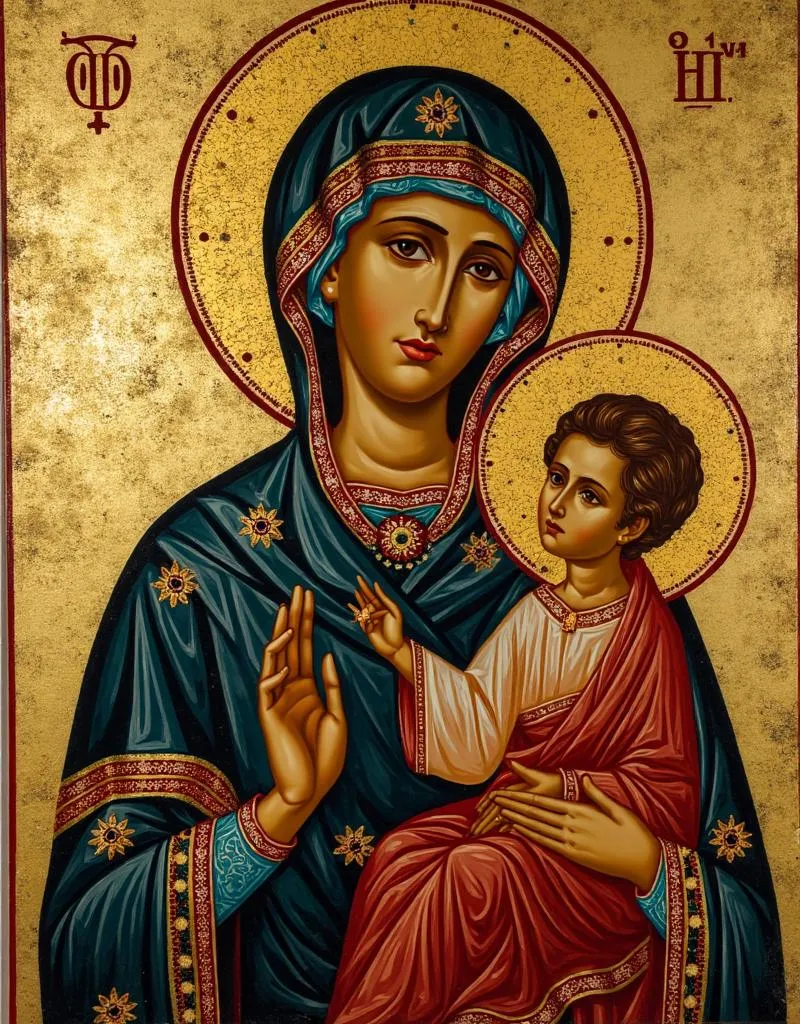
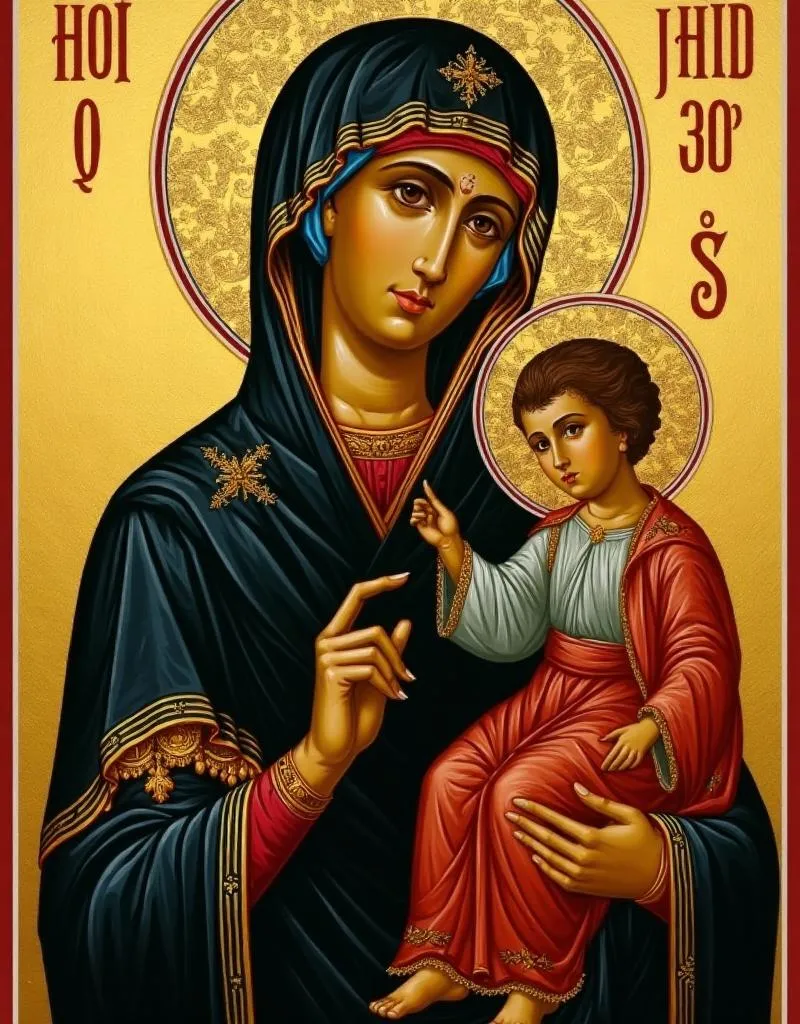
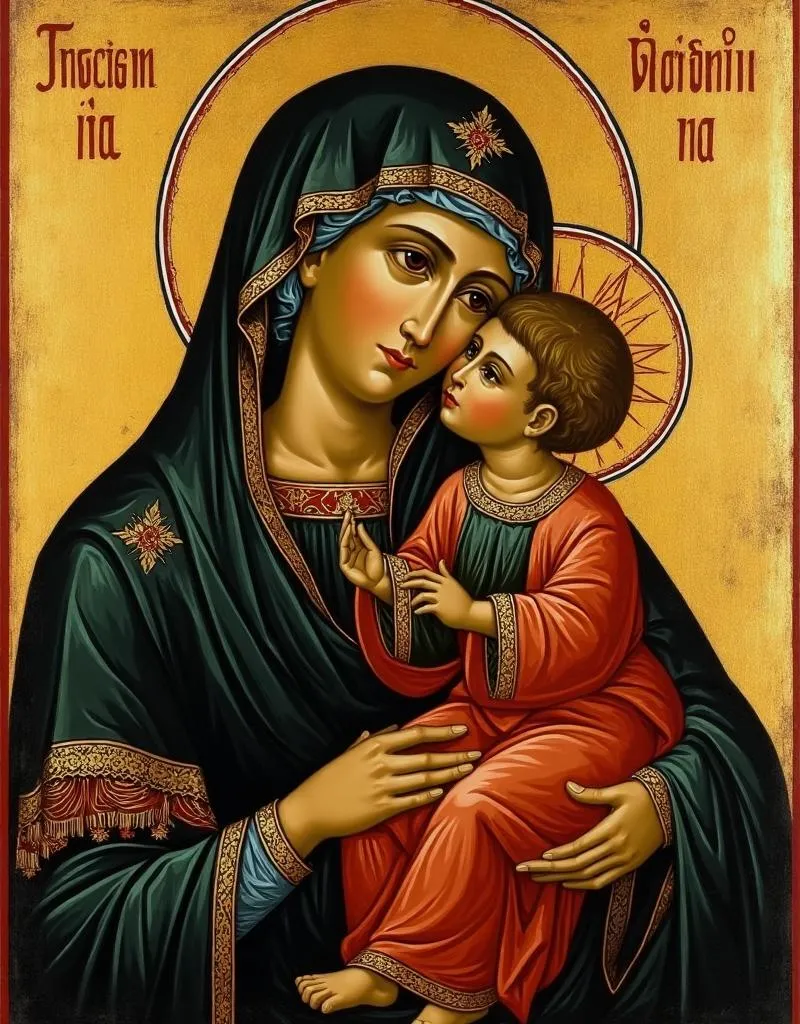
Perhaps the most beloved icon in the Russian Orthodox tradition, the Vladimirskaya depicts the Theotokos pressing her cheek against the Christ Child in an embrace of tender love. This compositional type is called Eleousa ('of tenderness' or 'of loving-kindness').
The icon is credited with saving Moscow from Tamerlane's invasion in 1395 and from other threats to Russia. It became the protectress of Moscow and of all Russia.
The original is dated to the 12th century and is attributed (by tradition) to the Evangelist Luke. Art historians believe it was painted in Constantinople around 1131 and brought to Kievan Rus' as a gift.
Symbolism & Iconographic Elements
The Embrace: The cheek-to-cheek embrace expresses the intimate love between mother and child, and by extension, between God and humanity.
The Child's Gesture: The Christ Child clings to his mother, suggesting his human vulnerability, while his gaze looks outward toward the viewer — toward all of us.
The Theotokos's Eyes: Her gaze is not at the Child but at the viewer, drawing us into the scene and asking us to see what she sees.
History
The icon was brought from Constantinople to Kiev around 1131, then moved to Vladimir (hence its name) by Prince Andrei Bogolyubsky in 1155. In 1395, it was brought to Moscow during the threat of Tamerlane's invasion. Tamerlane retreated, and Muscovites attributed their deliverance to the icon.
The original now resides in the Tretyakov Gallery in Moscow.
Prayer
Not in our own strength do we trust, O Lady, but in thy mighty intercession. Protect and shelter us beneath thy maphorion, and entreat thy Son, Christ our God, to have mercy on us.