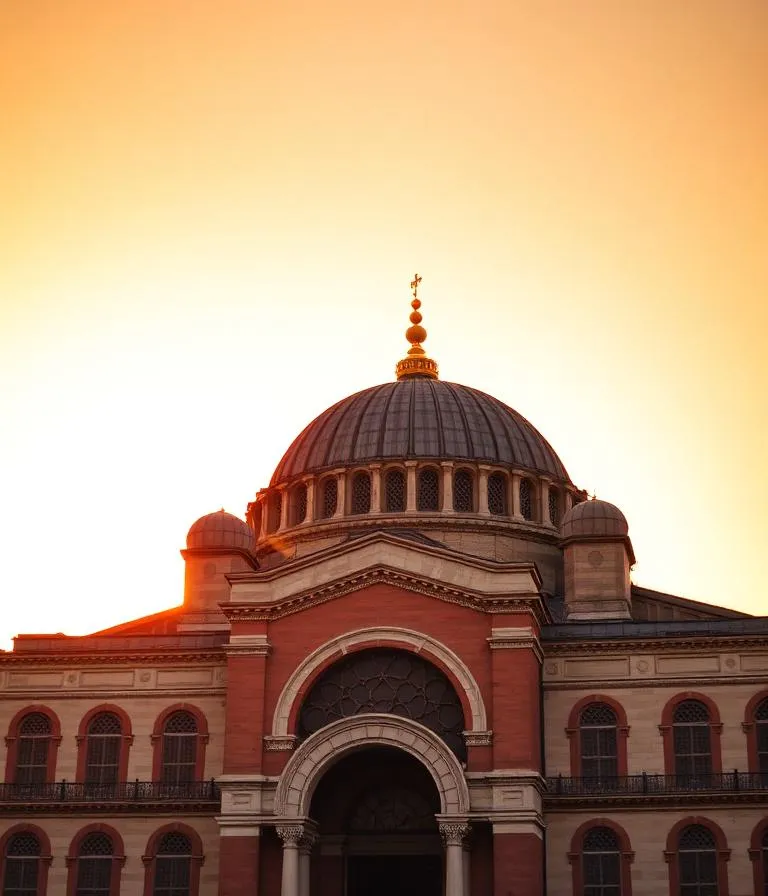
From Pentecost to the Present
The Orthodox Church traces its history in an unbroken line from the Day of Pentecost, when the Holy Spirit descended upon the apostles in Jerusalem. Orthodox Christians believe that this is not merely a historical claim — it is the defining identity of the Church. We are the same Church that was founded by Christ and entrusted to His apostles.
The Apostolic Age (1st Century)
After Pentecost, the apostles spread the Gospel throughout the Roman Empire and beyond. St. Paul established communities across Asia Minor and Greece. St. Andrew preached in Scythia and founded the Church of Constantinople. St. Mark brought the faith to Egypt. St. Thomas traveled to India. Within a generation, Christian communities existed from Rome to Persia.
The Age of Martyrs (1st–4th Centuries)
For nearly three hundred years, Christians faced periodic but intense persecution from the Roman Empire. Thousands died for the faith — from St. Stephen, the first martyr, to the victims of Diocletian's Great Persecution (303–313 AD). The blood of the martyrs became the seed of the Church.
The Ecumenical Councils (4th–8th Centuries)
After the Emperor Constantine legalized Christianity in 313 AD, the Church faced a new challenge: heresy. The great Ecumenical Councils were convened to define and defend the faith:
- Nicaea I (325) — Condemned Arianism, affirmed Christ's divinity, produced the Creed
- Constantinople I (381) — Affirmed the divinity of the Holy Spirit, completed the Creed
- Ephesus (431) — Affirmed Mary as Theotokos, condemned Nestorianism
- Chalcedon (451) — Defined Christ's two natures in one Person
- Constantinople II (553) — Clarified Chalcedonian theology
- Constantinople III (681) — Affirmed Christ's two wills (divine and human)
- Nicaea II (787) — Defended the veneration of icons, ended iconoclasm
"Where the Church is, there is the Spirit of God; and where the Spirit of God is, there is the Church and every kind of grace."
The Great Schism (1054)
The most painful division in Christian history occurred gradually over centuries but crystallized in 1054, when the Patriarch of Constantinople and the papal legate exchanged excommunications. The root causes included:
- The Filioque addition to the Creed by the Western Church
- The growing claims of papal authority and supremacy
- Cultural and political tensions between East and West
- Liturgical and disciplinary differences (celibate clergy, unleavened bread)
The Orthodox Church maintained that it had changed nothing — that it preserved the original apostolic faith while Rome had innovated.
The Fall of Constantinople (1453)
The capture of Constantinople by the Ottoman Turks in 1453 was a catastrophe for the Orthodox world. For nearly five centuries, millions of Orthodox Christians lived under Ottoman rule, enduring persecution, heavy taxation, and restricted rights. The Church survived through the faithfulness of ordinary believers, the witness of new martyrs, and the spiritual resilience of the monasteries.
Orthodoxy in America
The Orthodox faith arrived in North America in 1794, when Russian monks — including St. Herman of Alaska — established a mission on Kodiak Island. Today, Orthodox Christianity in America includes:
- The Orthodox Church in America (OCA) — autocephalous since 1970
- The Greek Orthodox Archdiocese (Ecumenical Patriarchate)
- The Antiochian Orthodox Archdiocese
- Parishes of the Serbian, Romanian, Bulgarian, Georgian, and other traditions
Despite its many jurisdictions, American Orthodoxy is one faith. All canonical Orthodox churches share the same doctrine, sacraments, and worship. The jurisdictional complexity reflects historical immigration patterns, not theological division.