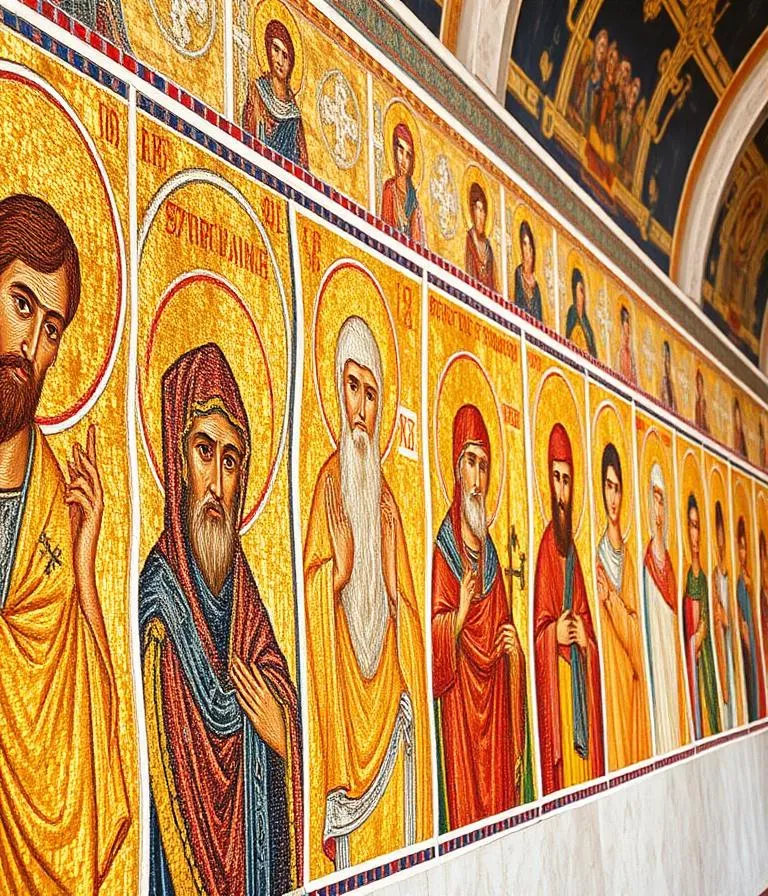
What Is a Saint?
In the Orthodox Church, a saint is anyone who has been united to God through a life of faith, repentance, and love — and whose holiness has been recognized by the Church. Saints are not spiritual superstars; they are ordinary people transformed by extraordinary grace.
The Orthodox calendar commemorates saints every single day of the year — apostles, martyrs, bishops, monks, fools-for-Christ, kings, and simple laypeople who loved God with their whole hearts.
The Church Fathers
The Church Fathers are the great theologians, bishops, and writers of the early and medieval Church whose teachings have shaped Orthodox doctrine. They are not infallible individually, but their consensus (the agreement of the Fathers) is considered a sure guide to the faith.
Key Church Fathers
- St. Athanasius of Alexandria (d. 373) — Defender of the divinity of Christ against Arianism
- St. Basil the Great (d. 379) — Theologian of the Holy Spirit, monastic legislator
- St. Gregory the Theologian (d. 390) — Master preacher, defender of Trinitarian doctrine
- St. John Chrysostom (d. 407) — "Golden-mouthed" preacher, liturgical reformer
- St. Maximus the Confessor (d. 662) — Theologian of the will of Christ
- St. John of Damascus (d. 749) — Defender of icons, systematic theologian
- St. Gregory Palamas (d. 1359) — Theologian of divine light and hesychasm
"We hold that faith which has been believed everywhere, always, by all. For that is truly and properly Catholic."
Holy Tradition
Holy Tradition is the living memory of the Church — the full inheritance of faith passed down from the apostles through every generation. It includes Scripture, the Creed, the decisions of the ecumenical councils, the writings of the Fathers, the liturgical texts, iconography, canon law, and the lived experience of the saints.
Tradition is not the same as "traditions" (customs that may vary from place to place). Holy Tradition is the unchanging core of the faith. Local customs — the style of vestments, the melodies of chant, the recipes for fasting meals — are expressions of Tradition, not Tradition itself.
The Calendar of Saints
Every day of the Orthodox year is dedicated to the memory of one or more saints. Their lives are read in church, their icons are venerated, and their prayers are sought. The most beloved saints include:
- The Theotokos (the Virgin Mary) — honored above all saints as the Mother of God
- St. Nicholas of Myra — the beloved wonder-worker (Dec. 6)
- St. George the Trophy-Bearer — the great martyr (Apr. 23)
- St. Seraphim of Sarov — the radiant Russian elder (Jan. 2)
- St. Herman of Alaska — the first Orthodox saint in the Americas (Dec. 13)
- St. Xenia of St. Petersburg — the holy fool-for-Christ (Jan. 24)
The Veneration of Saints
Orthodox Christians venerate the saints — we honor them, ask for their prayers, and strive to imitate their lives. This is not worship, which belongs to God alone. The distinction is fundamental:
- Worship (latreia) — given to God alone
- Veneration (dulia) — honor given to the saints
- Hyperveneration (hyperdulia) — special honor given to the Theotokos