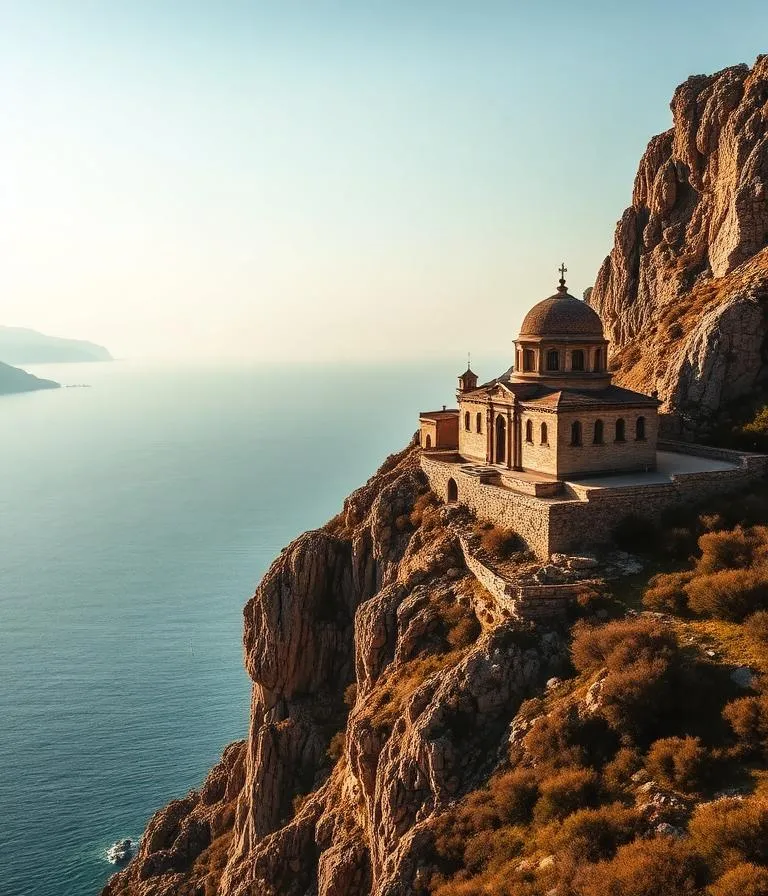
The Heart of Orthodoxy
Monasticism is often called the heart of the Orthodox Church. While not every Christian is called to be a monk or nun, the monastic life represents the fullest expression of the Gospel call to leave everything and follow Christ. The spiritual wisdom of the monasteries has nourished the entire Church for nearly two thousand years.
The Desert Fathers and Mothers
The monastic movement began in the deserts of Egypt, Palestine, and Syria in the 3rd and 4th centuries. As the Church became socially acceptable after Constantine, some Christians sought a more radical commitment to the Gospel by withdrawing into the wilderness.
Key Figures
- St. Anthony the Great (d. 356) — the "father of monasticism," who lived as a hermit in the Egyptian desert for decades
- St. Pachomius (d. 348) — founder of communal (cenobitic) monasticism, establishing the first monastic rule
- St. Macarius the Great (d. 391) — desert elder renowned for his spiritual discernment
- Amma Syncletica (d. c. 350) — one of the great Desert Mothers, whose sayings rival those of any Father
- St. Mary of Egypt (d. c. 421) — a repentant sinner who lived 47 years in the desert in prayer and fasting
"Sit in your cell, and your cell will teach you everything."
The sayings and stories of the Desert Fathers and Mothers — collected in the *Apophthegmata Patrum* (Sayings of the Fathers) — remain among the most beloved and widely read texts in Orthodoxy.
The Monastic Rule of St. Basil
In the 4th century, St. Basil the Great organized monastic life around a balanced rule of prayer, manual labor, study, and community life. Unlike the later Western Rule of St. Benedict, Basil's rule emphasized flexibility and pastoral wisdom. Most Orthodox monasteries follow the Basilian tradition in some form.
Mount Athos: The Holy Mountain
Mount Athos, a peninsula in northern Greece, is the spiritual center of Orthodox monasticism. For over a thousand years, it has been a self-governing monastic republic, home to twenty principal monasteries and numerous smaller communities (sketes, cells, and hermitages).
Mount Athos is dedicated entirely to the Theotokos — no women have been permitted to enter since the 11th century. The monasteries preserve ancient liturgical traditions, manuscripts, icons, and the living practice of hesychasm (inner stillness and unceasing prayer).
Mount Athos operates on Byzantine time — the day begins at sunset, and the Julian calendar is used. Visitors (male only) may obtain a *diamonitirion* (pilgrim's permit) to stay in the monasteries, attending services and sharing in the monastic life.
Monasticism in America
Orthodox monasticism is alive and growing in North America. Major monasteries include:
- St. Anthony's Greek Orthodox Monastery (Florence, Arizona) — founded by Elder Ephraim, one of the largest Orthodox monasteries in the Western Hemisphere
- Holy Trinity Monastery (Jordanville, New York) — a center of Russian Orthodox monastic life and theological education
- New Skete (Cambridge, New York) — known for its liturgical renewal and dog breeding
- St. Tikhon's Monastery (South Canaan, Pennsylvania) — the oldest Orthodox monastery in North America
- Holy Archangel Michael & All Angels Skete (Weatherby, Missouri) — a small hermitage following the ancient eremitic tradition
The Monastic Life
The Daily Rhythm
A monk's day is structured around the daily cycle of services: Midnight Office, Matins, the Hours, Divine Liturgy, Vespers, and Compline. Between services, monastics engage in manual labor (farming, iconography, baking, bookbinding) and private prayer, particularly the Jesus Prayer.
The Monastic Vows
Orthodox monastics take three principal vows:
- Poverty — renouncing personal possessions
- Chastity — celibacy and purity of heart
- Obedience — submitting one's will to the abbot/abbess and the community
The Tonsure
The monastic tonsure (cutting of hair) is a liturgical rite in which the monk or nun is given a new name, symbolizing the death of the old self and birth into the angelic life. There are traditionally three degrees: Rassophore (beginner), Stavrophore (cross-bearer), and Schema monk/nun (the highest degree of monastic commitment).
"Acquire the Spirit of peace, and a thousand souls around you will be saved."
Why Monasticism Matters for Everyone
Even if you never become a monk, the monastic tradition offers profound gifts to every Orthodox Christian:
- The Jesus Prayer — a practice for laypeople as well as monastics
- Spiritual fatherhood — many laypeople seek guidance from monastic elders
- Hospitality — most monasteries welcome visitors for retreats and pilgrimage
- A living witness — monasteries demonstrate that a life wholly devoted to God is possible in the modern world