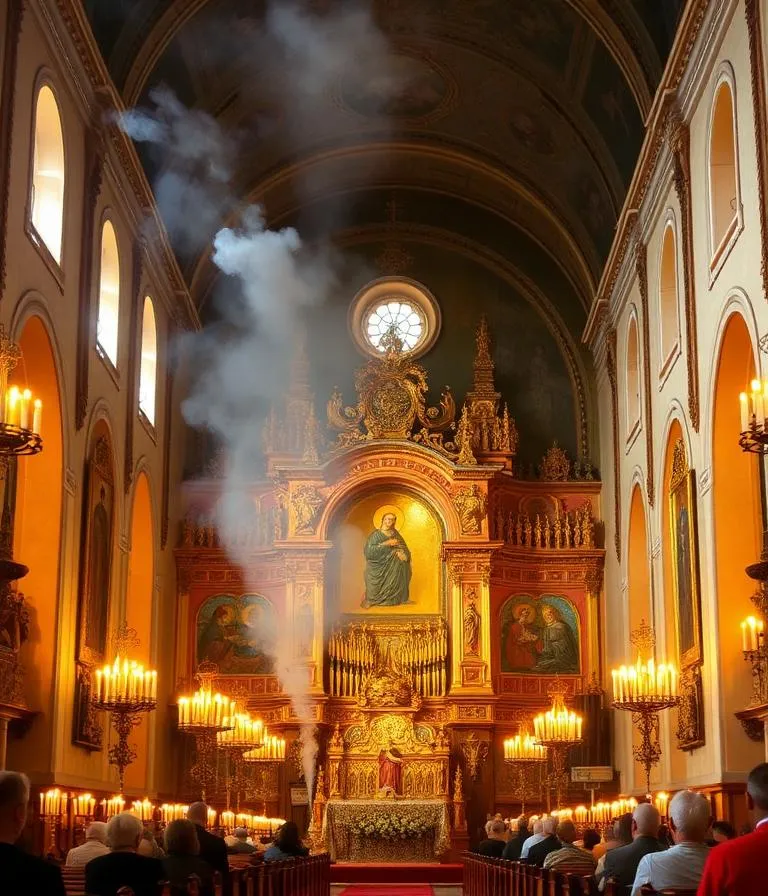
The Divine Liturgy
The Divine Liturgy is the central act of Orthodox Christian worship — the weekly gathering where the faithful receive the Body and Blood of Christ in the Eucharist. It is not a performance to be watched, but a cosmic event to be entered into. Heaven and earth meet at the altar.
The Liturgy follows the same essential shape it has had for over 1,500 years. It begins with the Proskomedia (the preparation of the bread and wine), followed by the Liturgy of the Word (Scripture readings, the sermon), and culminates in the Liturgy of the Faithful (the Eucharistic prayer and Holy Communion).
The Structure of the Service
The Liturgy of the Word
The first half of the Liturgy centers on hearing God's Word. The Small Entrance — a procession with the Gospel book — symbolizes Christ coming among His people. The Epistle and Gospel are read aloud, followed by the homily.
The Liturgy of the Faithful
The second half begins with the Great Entrance, when the bread and wine are carried to the altar in a solemn procession representing Christ's journey to Calvary. The congregation recites the Nicene Creed together, and then the priest offers the Anaphora — the great prayer of thanksgiving — calling upon the Holy Spirit to transform the bread and wine into the Body and Blood of Christ.
"Consider how indignant you are against the traitor, against those who crucified Him. Take care, then, lest you also become guilty of the Body and Blood of Christ. They slaughtered His most holy Body; you receive it with a filthy soul after so many blessings."
The Daily Cycle of Prayer
Orthodox worship extends far beyond Sunday. The Church keeps a daily cycle of services:
- Vespers — the evening service, beginning the liturgical day at sunset
- Compline — prayers before sleep
- Midnight Office — the vigil of prayer
- Matins (Orthros) — the great morning service of psalms, canons, and hymns
- The Hours — brief services marking the 1st, 3rd, 6th, and 9th hours of the day
Most parishes celebrate Vespers on Saturday evening and Matins before the Sunday Liturgy. Monasteries keep the full daily cycle.
The Church Building
An Orthodox church is designed as an icon of the Kingdom of God. Every element has theological meaning:
- The Narthex — the entrance, representing the world
- The Nave — where the congregation stands, representing the Church on earth
- The Sanctuary — behind the iconostasis, representing heaven
- The Iconostasis — the icon screen separating nave from sanctuary, covered with icons of Christ, the Theotokos, saints, and feast days
If you're visiting an Orthodox church for the first time, don't worry about doing everything perfectly. Stand when others stand, sit when they sit, and simply let the beauty of the worship wash over you. You are welcome.
Music and Chanting
Orthodox worship is almost entirely sung or chanted — there are no musical instruments in most Orthodox traditions. The human voice is considered the most fitting instrument for praising God. Chant styles vary by tradition: Byzantine, Slavic, Arabic, Georgian, and others each have their own haunting beauty.
The Church Calendar
The Orthodox liturgical year is organized around two great cycles:
- The Paschal Cycle — centered on Pascha (Easter), the Feast of Feasts, including Great Lent, Holy Week, and the Pentecostarion
- The Fixed Cycle — the twelve Great Feasts, saints' commemorations, and fasting periods that recur on the same date each year